That Age Old Secret
On Psychedelics, Secrecy and the Eleusinian Mysteries

“We need the tonic of wildness...At the same time that we are earnest to explore and learn all things, we require that all things be mysterious and unexplorable, that land and sea be indefinitely wild, unsurveyed and unfathomed by us because unfathomable. We can never have enough of nature.”
― Henry David Thoreau
Welcome to this week’s This Week We Learnt!
Despite writing numerous essays on Aristophanes’ Frogs this academic year, I have not been able to properly speak about one of the most fascinating phenomena of the ancient world: Mystery Cults. In the Frogs, the Chorus of Initiates (the mystai) are worshippers of Dionysus and Demeter who provide wisdom, political satire, and guide the protagonists through the underworld.
The Initiates are, essentially, the moral and dramatic conscience of the comedy.
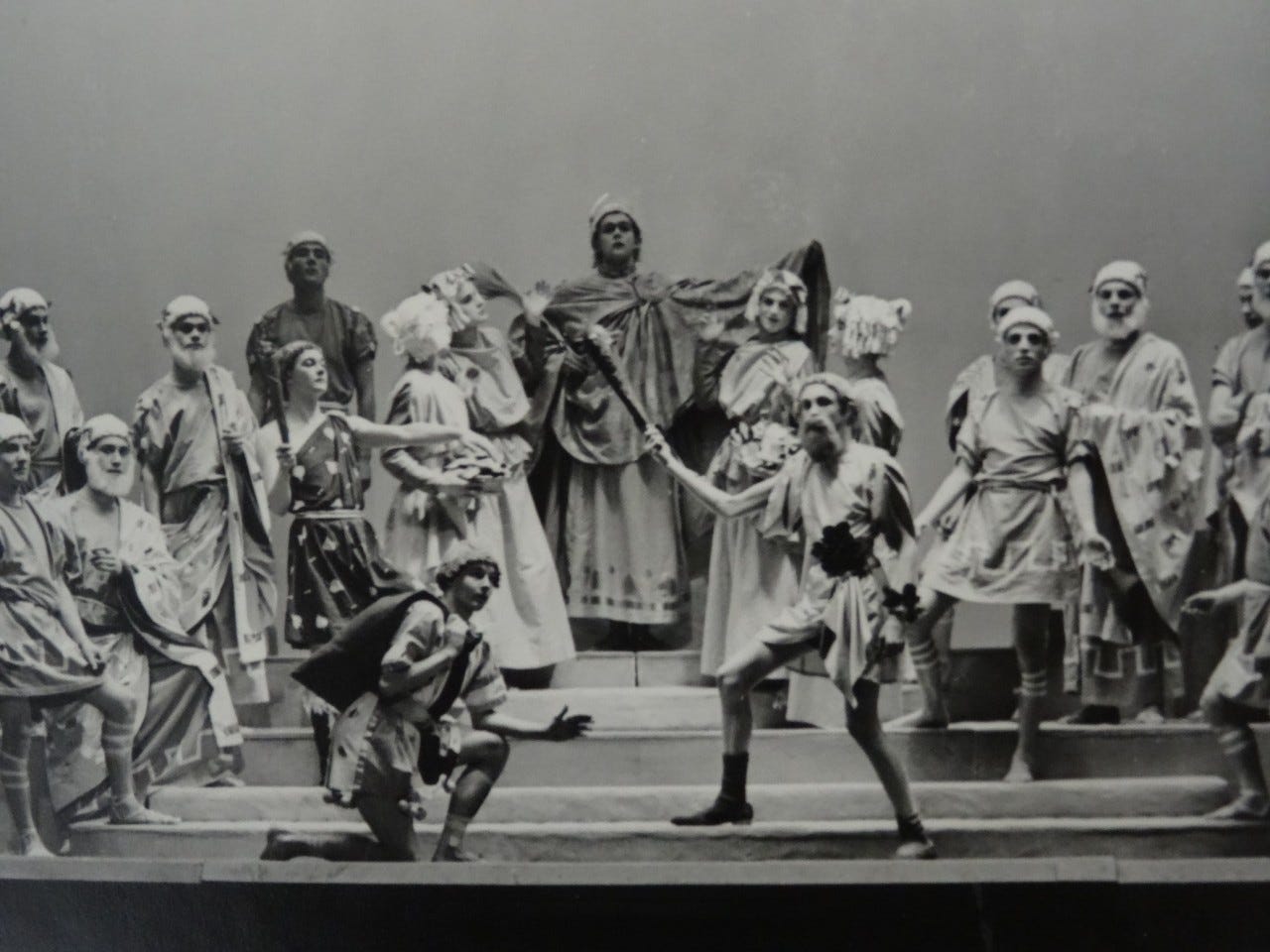
However, unlike their presence in Aristophanes’ play might suggest, the existence and nature of the Eleusinian Mysteries remains as opaque to historians now as the name implies. The rites and celebrations that took place were sealed by an oath of secrecy sworn by all those initiated, one that, a testament to its success, seems to have died with the last initiate.
The matter of secrecy was, in fact, legally binding: initiates were forbidden by Athenian law from disclosing the secrets of the Mysteries. Those who disobeyed were committing a capital offence, and were punished with the death penalty. The most famous instance of such legal sanction being brought to bear is the trial of Alcibiades in 415 BCE, who was among those prosecuted for allegedly re-enacting the rites at a private symposium.
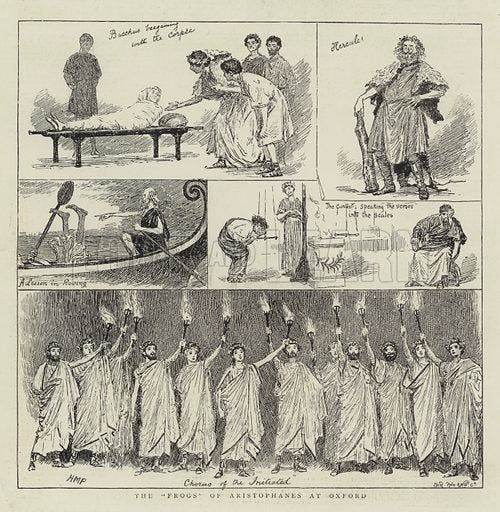
Celebrated annually for roughly two thousand years, the Eleusinian Mysteries were celebrated in the town of Eleusis, fourteen miles outside of Athens, and were the oldest and most prestigious of their kind in the ancient Greek world. Hundreds of thousands of Initiates, not only to Athenian citizens but to women, slaves, and some foreigners, flocked to the multi-day rites of the Mysteries to honour the goddess Demeter and her daughter Persephone.
Demeter’s typical association is with agriculture, her cult worship relating to that concerned with the earth and the natural cycles of life and nourishment. But the worship of Demeter in the Mysteries is oriented around a different register of her mythology, drawn from the Homeric Hymn to Demeter, which tells the tale of bitter separation and joyful reunion between the goddess and her daughter, Kore (later Persephone) after she was abducted by Hades and taken to the Underworld.
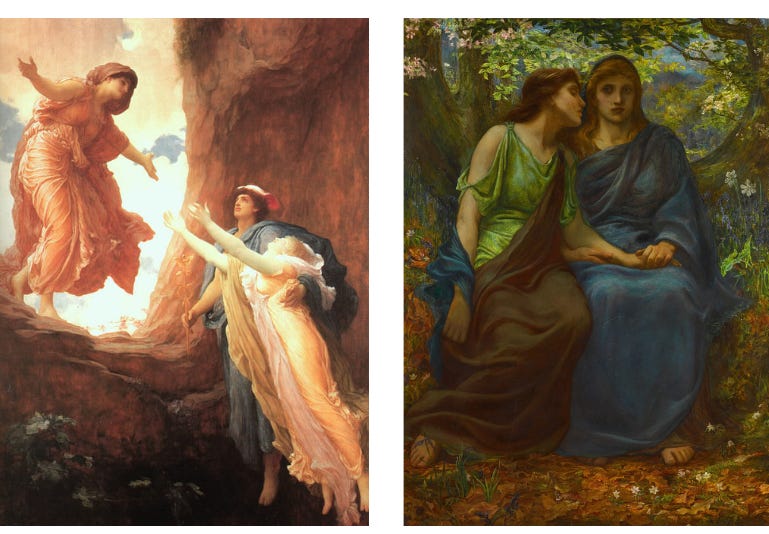
The Hymn speaks of the profound disorientation and grief Demeter endured following Kore’s disappearance, and how, in her distress, she neglected her task of nurturing the natural world. Searching and searching, Demeter, disguised as a human nurse, was said to have stopped to rest at Eleusis, and ordered a temple and altar to be built there in her honour. When Kore, now Persephone, the goddess of the dead and the wife of Hades, was returned to her mother, though compelled to spend only half of the year on earth and the remaining time in the underworld, Demeter instructed the leaders of Eleusis in her sacred, and secret, rites.
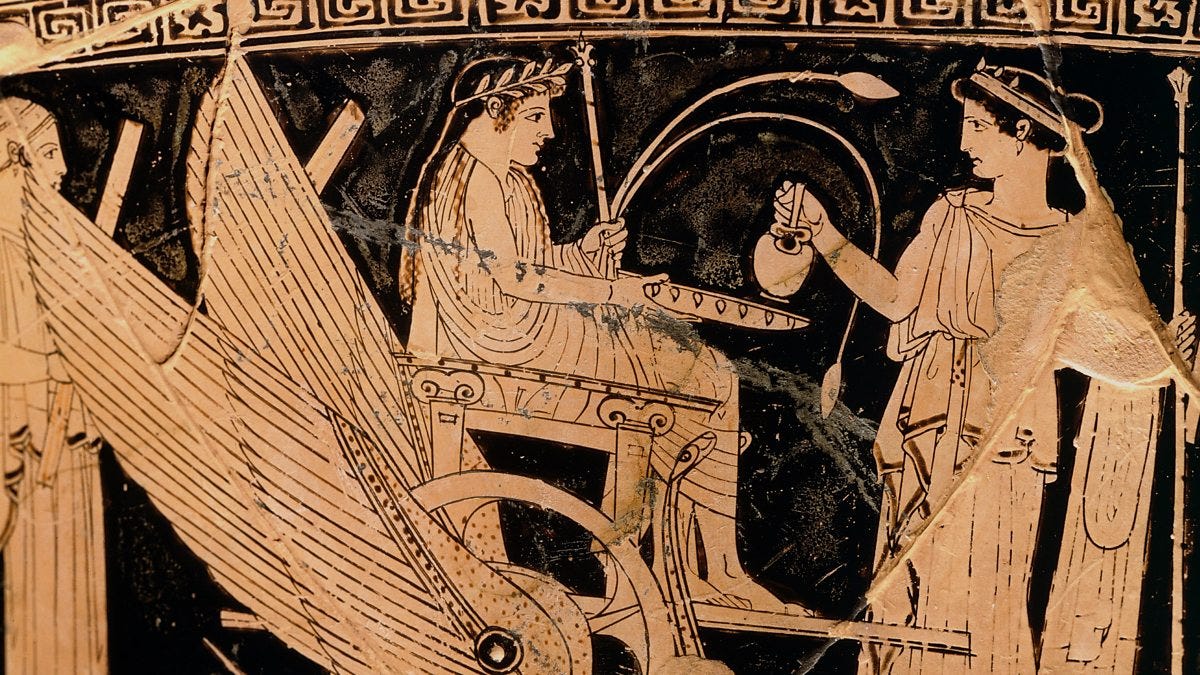
It is from these sacred rites that the Eleusinian Mysteries take their shape, and it is precisely their sacred and secret nature that makes them so difficult to reconstruct. Much of what we know comes from a patchwork of archaeological remains, passing references in ancient literature, and a small number of images: all of which, by design, fail to show us what we most want to see.
The Experience of the Initiates
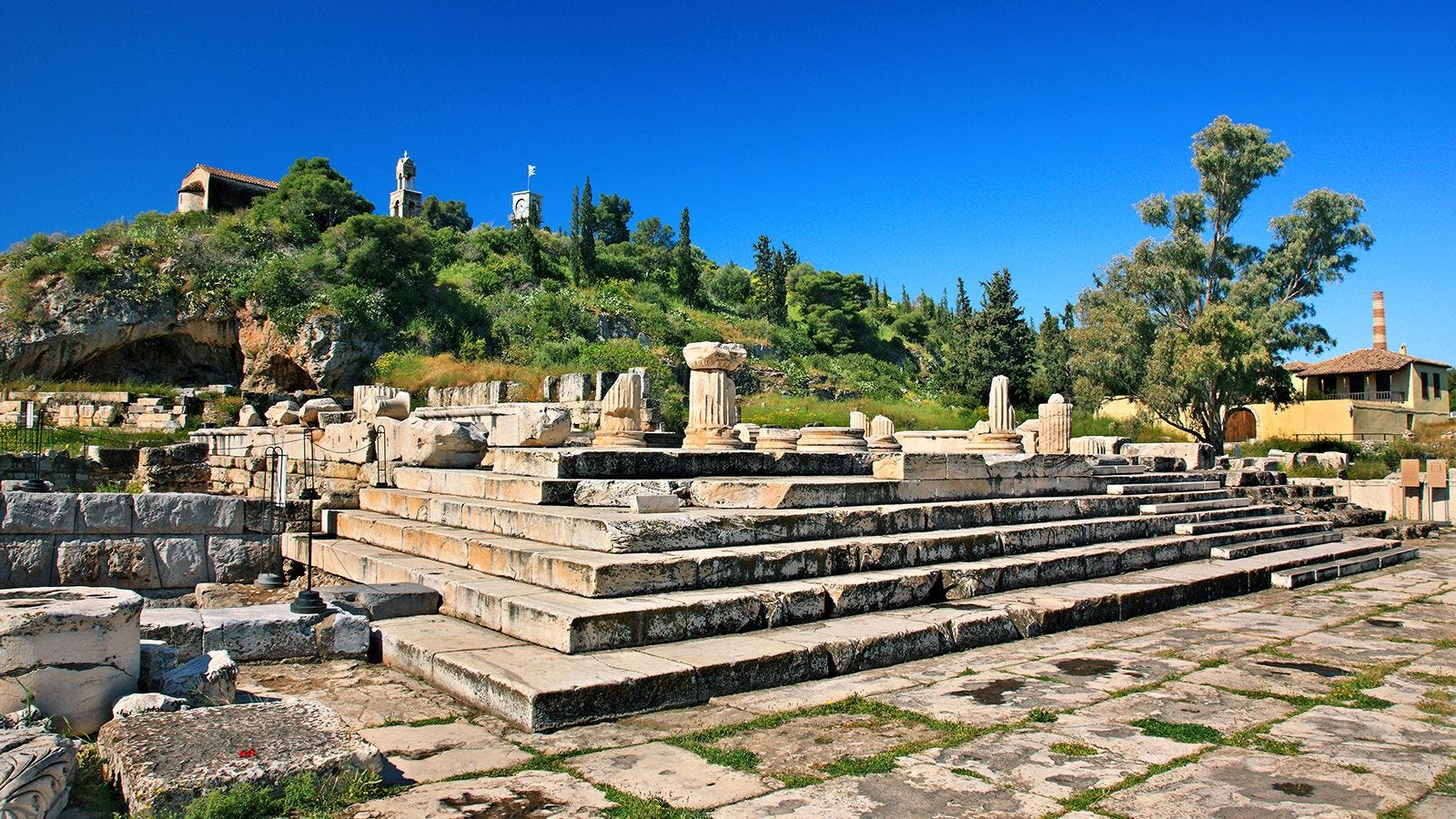
The Mysteries were divided into two parts: the Lesser Mysteries and the Greater Mysteries. The Lesser Mysteries were a result of Hercules, Castor, and Pollux desiring to be initiated when they stayed in Athens at the time of the celebration of the Mysteries.
The ceremonies of the Lesser Mysteries entirely differed from those of the Greater Mysteries, representing the return of Persephone to earth at Eleusis; the Greater Mysteries represented her descent into Hades. The Lesser Mysteries honoured the daughter more than the mother, who was the principal figure in the greater Mysteries. In the Lesser Mysteries, Persephone was known as Pherrephatta, and in the Greater Mysteries she was given the name of Kore.
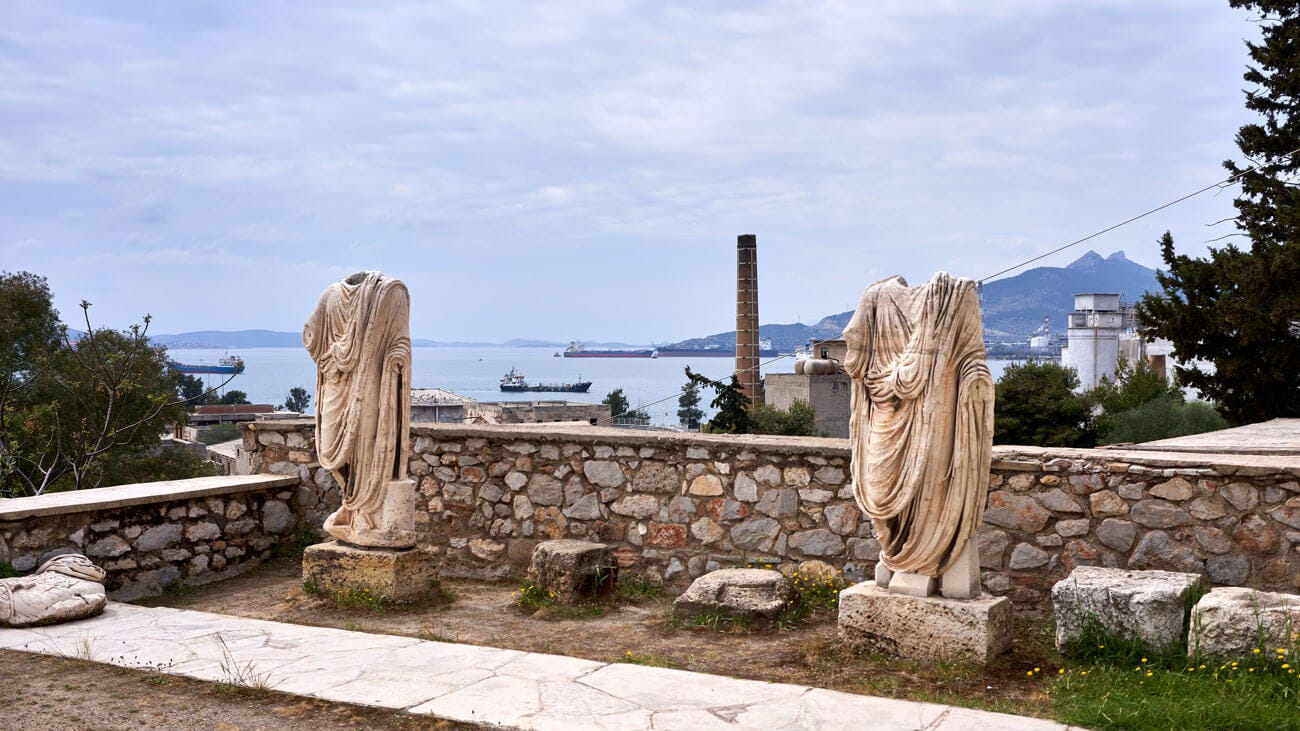
The day before the start of the Greater Mysteries in early September, the priestesses of Demeter and Persephone commenced the procession along the Sacred Way from Athens to Eleusis, fasting, carrying torches, and invoking the names of goddesses. On arrival, initiates entered the Telesterion, or Hall of Initiation, a large hall built for a collective assembly in darkness, where Initiates are thought to have perhaps reenacted and identified with Demeter’s grief while Kore was lost.
The initiates are known to have been served a drink called kykeon. Various scholars have advanced a psychedelic hypothesis, which argues that the kykeon was adulterated with ergot, a fungus parasitic on grain that contains alkaloids chemically related to lysergic acid diethylamide. The altered states of consciousness produced by this mixture would, by their argument, explain both the intensity of initiates’ experiences and the lasting psychological transformation the ancient sources consistently describe.
However, many scholars dispute this due to lack of evidence. I find myself skeptical too. While a thoroughly fascinating theory, this hypothesis would require us to posit a consistent and sophisticated pharmacological operation sustained across centuries, when no ancient source describes the kykeon even as anything other than a simple preparation of barley, water, and mint.
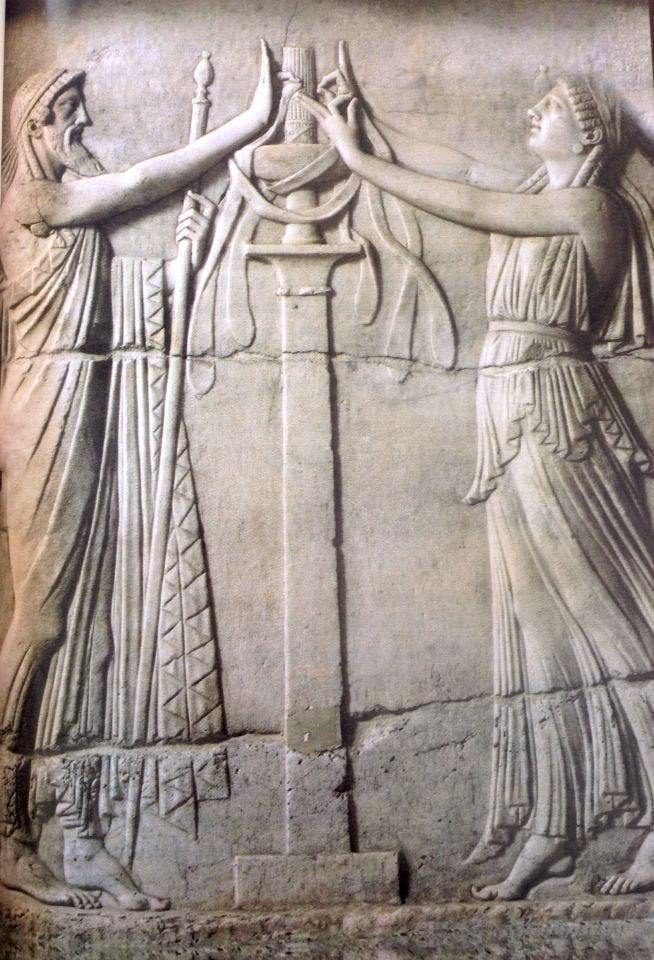
Beyond this point, we, like the Initiates, are plunged into darkness. We know that something was recited, something was revealed and acts were performed, but the precise nature of these remains largely obscure.
Some writers speak with a kind of reticent clarity: Pindar (Fragment 102) wrote that those who had witnessed the rites understood the end of life and its divine origin:
“Blessed is he who has seen these things before he goes beneath the earth; for he understands the end of mortal life, and the beginning (of a new life) given of god.”
Cicero, initiated in the first century BCE, called the Mysteries the greatest gift Athens had given the world. The Homeric Hymn to Demeter is explicit on the soteriological stakes of initiation: those initiated would fare well in the underworld, while those who had not undergone the rites would have nothing good waiting for them.
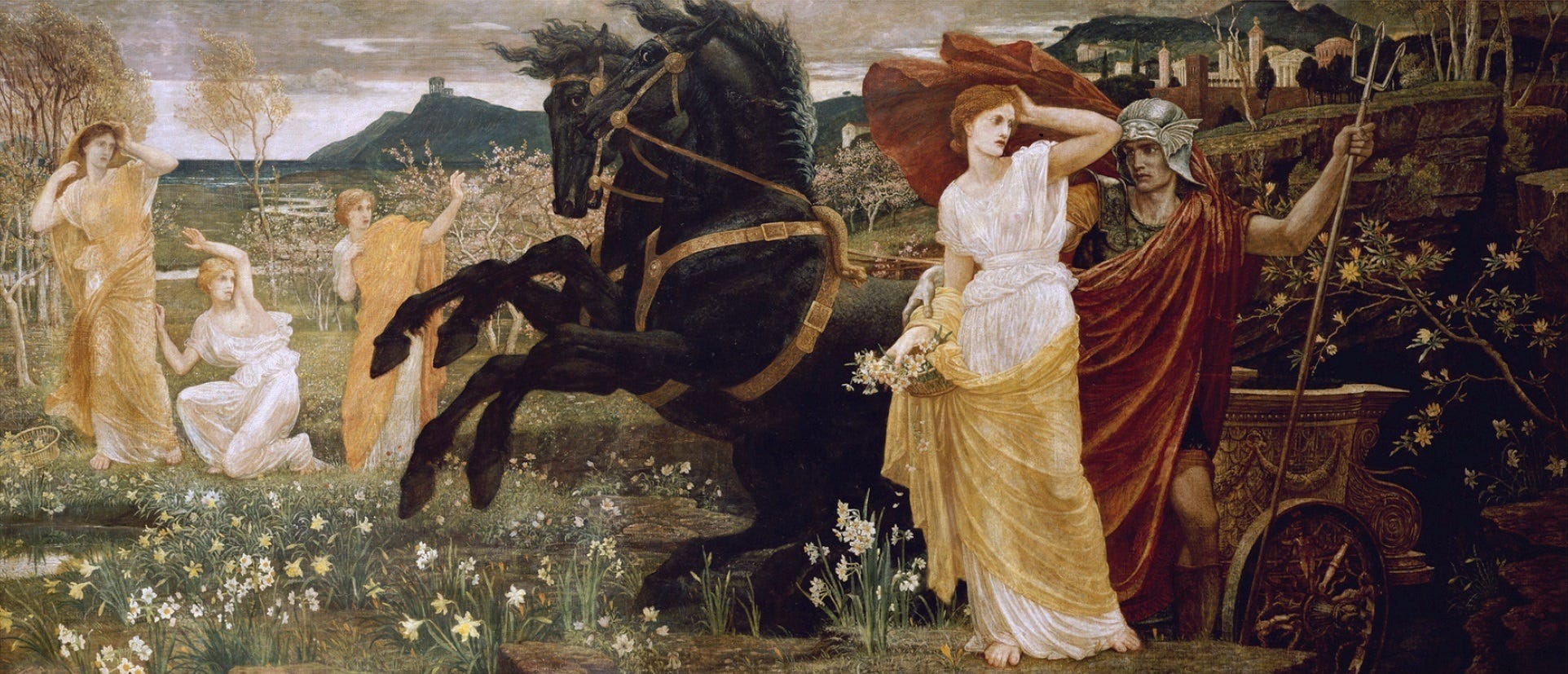
The most explicit information we are afforded is in the mouths of later Christian authors (including Hippolytus of Rome, Refutation of all Heresies, 5.3), though they write with the express intention of defaming the rites as pagan abominations. These Christian sources write on the rites tripartite structure: things done (dromena), things said (legomena), and things shown (deicnumena). The third category is understood to represent the climax of the ritual, wherein some kind of epiphanic revelation (the epopteia) is reached, the content of which is never described directly.
The Ninnion Tablet
The most significant visual evidence we possess of the Mysteries is the Ninnion Tablet, a red-figure votive plaque dated to around 370 BC, discovered at Eleusis and now housed in the National Archaeological Museum in Athens (which I was lucky enough to visit a few years ago!)
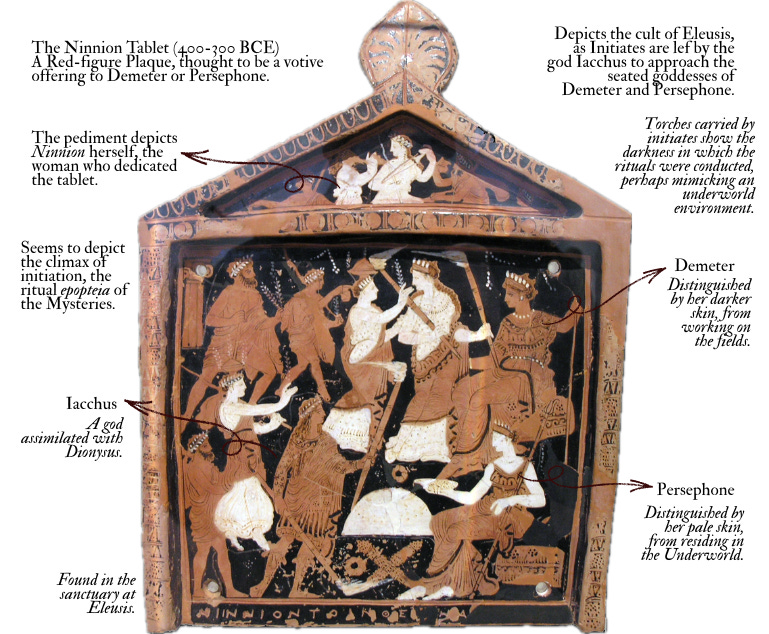
The plaque was dedicated by a woman named Ninnion (from whom it takes its name) as a personal offering to the goddesses. Depicted are two processions, led by Iacchus, approaching Demeter and Persephone, with Initiates bearing torches and some the kiste, a sacred basket at the centre of the rite whose contents no ancient source describes.
The interpretations of the scene(s) on the tablet are split into two schools: those who support a single composition hypothesis believe that the tablet depicts a procession of initiates (men, women, and children) towards the two goddesses (Demeter and Persephone) who are seated on the right, with unity of place and time in the scene. The two figures who carry torches act as intermediaries between mortals and gods and present the initiates to the deities of Eleusis. The woman in the upper scene is Hekate, while the young man in the lower scene is Iacchus.
Those of the other school support a view that the plaque depicts two scenes of different temporalities (a dual composition): one from the Lesser Mysteries and the other the Greater Mysteries.
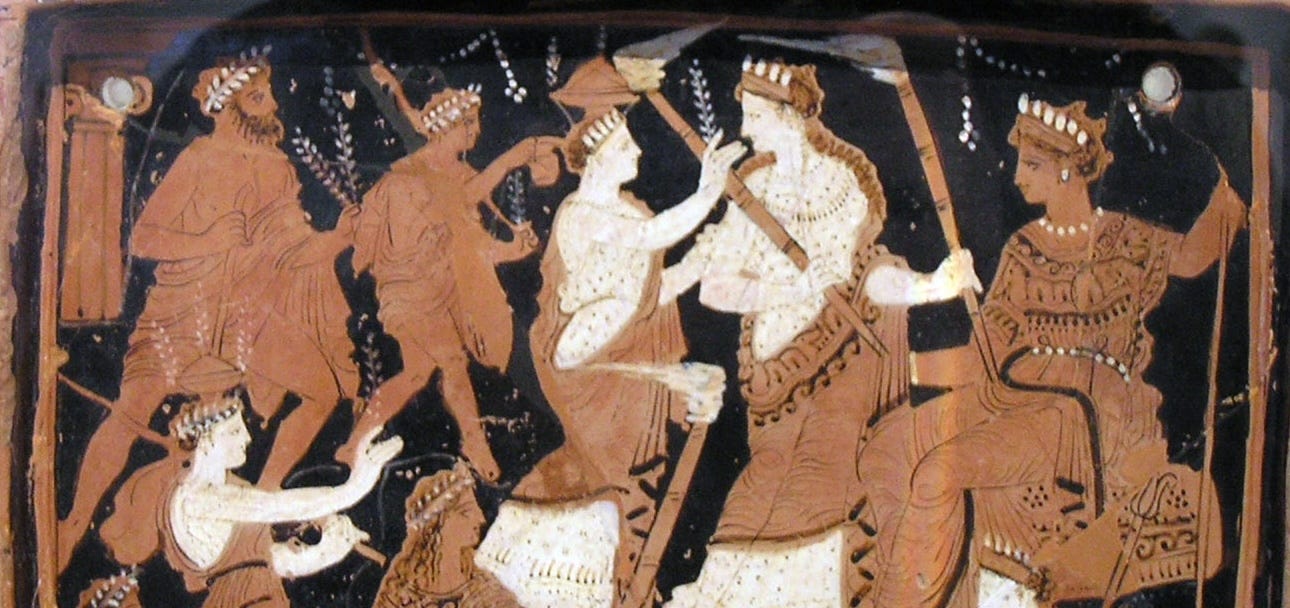
This would make the woman carrying the torch in the upper register Kore, leading the initiates to her mother, Demeter, who appears seated and holds a sceptre. Accordingly, the lower register would record Iacchus presenting the initiates to Demeter after their arrival to Eleusis in the Greater Mysteries, where Persephone has descended already to the Underworld.
I will not attempt to adjudicate between the two schools, but what strikes me is that this obscurity of visual culture surrounding the Mysteries internalises the same discipline as the initiates themselves, consistently offering the frame while withholding the centre, as though the boundary of the representable had been precisely mapped and observed. Whether intentional or simply a consequence of the absence of any corroborating written or material evidence, the secret is here maintained all the same.
Until next time,