

The Forbidden Experiment
A brief history of one of the most unethical experiments ever conceived

"What I call the forbidden experiment is one that would reveal to us what 'human nature' really is beneath the overlays of society and culture".
Roger Shattuck
Welcome to this weeks (rather late) This week we learnt1!
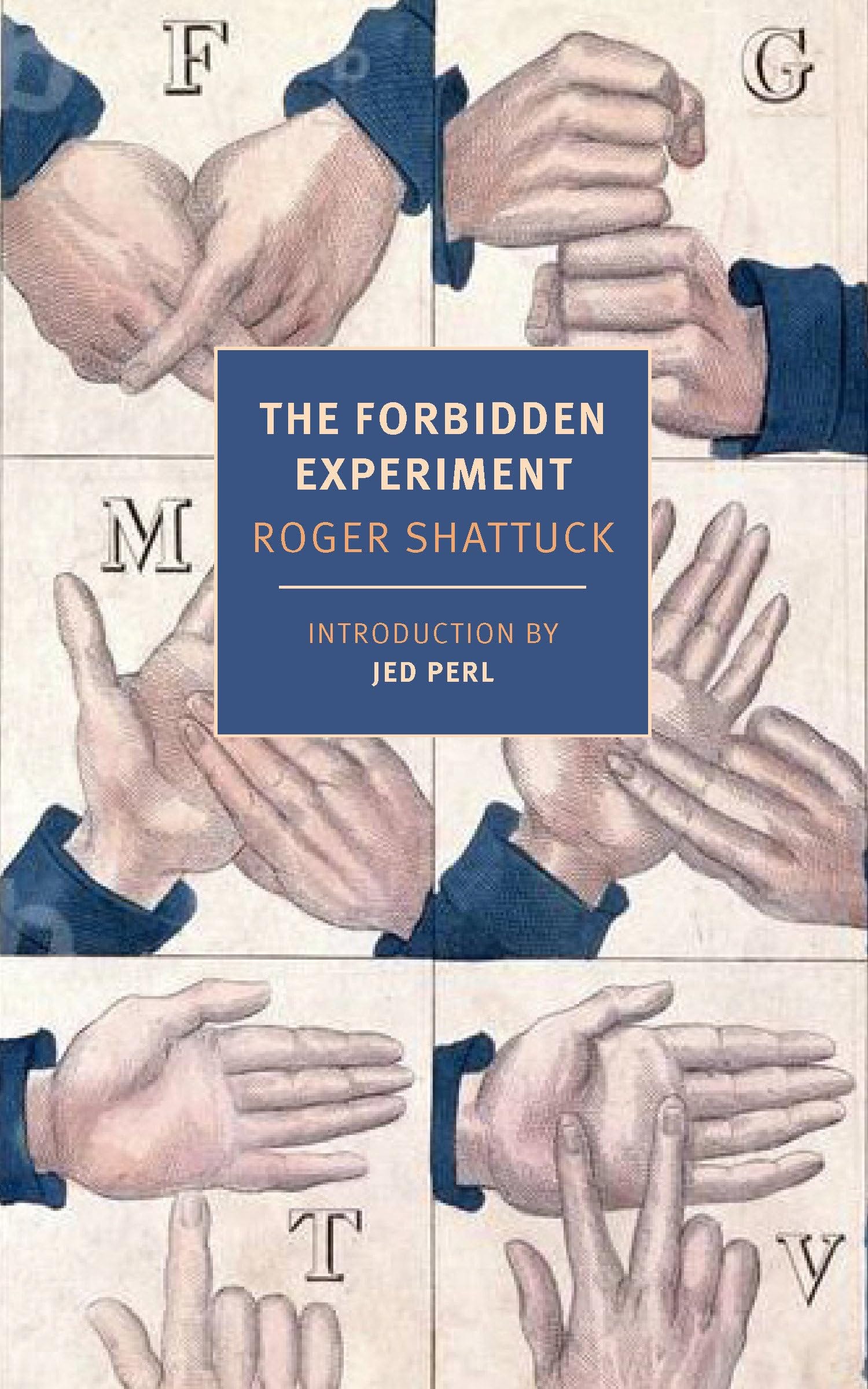
Recently, I was asked by a friend what experiment I would conduct if ethics weren’t a concerned and my mind immediately (and forgivably) jumped to the “forbidden experiment”. For those who haven’t heard of this experiment, it was a hypothetical “language deprivation experiment” coined by literary scholar Roger Shattuck. The experiment posits that if you isolated infants without any access to language, would they develop one? It hopes to assess whether language development is innate or something conditioned.
Now, understandably, this experiment has never been successfully conducted in a truly scientific fashion due to just how unethical it would be. Developmental research suggests that the amount of intentional social isolation and deprivation required would traumatise the infants beyond belief, with effects potentially being irreversible.
However, surprisingly, (allegedly) a few attempts have been made at answering this question across history.
Psamtik (Psammetichus) I of Egypt
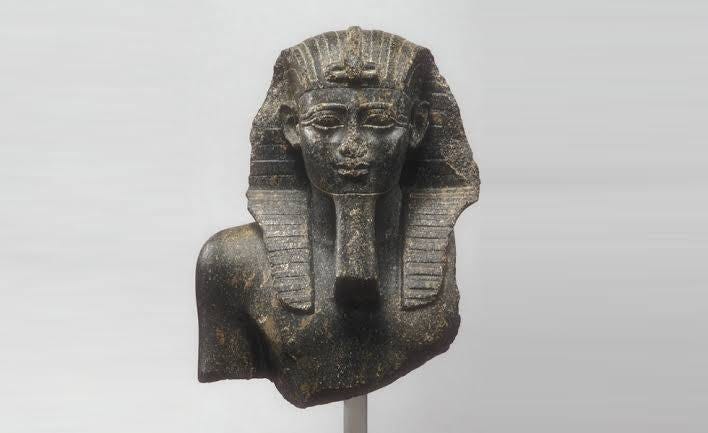
The first “language deprivation experiment” was allegedly conducted by the Egyptian pharaoh Psamtik around 600 B.C, though the evidence comes from the Greek historian Herodotus in his second volume of histories, written during his visit to Egypt:
‘Now until Psammetichus reigned over them, the Egyptians believed that they were the eldest of all men. But ever since Psammetichus became king and resolved to learn who were indeed the eldest, they have believed that the Phrygians were before them, but they themselves before the rest. For when Psammetichus was not able by enquiring to learn the answer from any man, he conceived this device. He gave two new-born babes of ordinary men to a shepherd, to nurture among his flocks after this manner. He charged him that none should utter any speech before them, but they should live by themselves in a solitary habitation; and at the due hours the shepherd should bring goats to them, and give them their fill of milk, and perform the other things needful. Thus Psammetichus did and commanded because he desired, when the babes should be past meaningless whimperings, to hear what tongue they would utter first. And these things came to pass; for after the shepherd had wrought thus for a space of two years, when he opened the door and entered in, both the babes fell down before him, and cried becos, and stretched out their hands. Now when the shepherd heard it the first time, he held his peace; but when this word was oftentimes spoken as he came to care for them, then he told his lord, and brought the children into his presence when he commanded. And when Psammetichus had also heard it, he enquired which nation called anything becos; and enquiring, he found that the Phrygians call bread by this name. Thus the Egyptians, guided by this sign, confessed that the Phrygians were elder than they. That so it came to pass I heard of the priests of Hephaestus in Memphis.’
Histories (English translation by Powell (1949:109-10) of Book II, section 2)
Now, whilst there are many debates about the extent of the legitimacy of the study and its findings (considering the only source we have is a secondary one written almost 200 years later) however, if it was true, this study would have been the first psychology study ever conducted, which is pretty sick.
Frederick II (Hohenstaufen) of Sicily
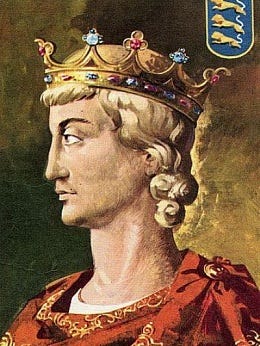
The second attempt at the forbidden experiment was conducted by Frederick II, a man at the time simultaneously regarded as the “Stupor mundi” (the wonder of the world) by his citizens and court and the “preambulus Antichristi” (the forerunner for the antichrist) by the church. A scientifically minded renaissance man, he was one of the most foremost figures and renowned rulers of the Middle Ages. He spoke 6 languages, which likely explains why he desired to replicate Psammetichus’ experiment.
His version of experiment was chronicled by Brother Salimbene, a Franciscan friar:
‘Like Psammetichus, in Herodotus, he made linguistic experiments on the vile bodies of hapless infants, bidding foster-mothers and nurses to suckle and bathe and wash the children, but in no wise to prattle or speak with them; for he would have learnt whether they would speak the Hebrew language (which had been the first), or Greek, or Latin, or Arabic, or perchance the tongue of their parents of whom they had been born. But he laboured in vain, for the children could not live without clappings of the hands, and gestures, and gladness of countenance, and blandishments.’
Coulton’s (1907) translation of the Cronica Fratis Salimbene de Adam Ordinus Minorum,
Though, again, our only source is a secondary one, the conclusion of this experiment aligns a lot more clearly with what we would naturally expect. Additionally, placing emphasis on the importance of childrearing was an unusual take at the period, potentially adding to the sources credibility.
James IV of Scotland
In likely the most famous rendition of this experiment:
“And alſo the king gart take a dumb woman, and put her into Inch-Keith, and gave her two young bairns in company with her, and gart furniſh them with all neceſſaries, that is to ſay, meat, drink, fire and clothes, with all other kind of neceſſaries which are required to man or woman, deſiring to underſtand the language thir bairns could ſpeak, when they came to lawful age. Some ſay they ſpake good Hebrew: But, as to myſelf, I know not, but by the author’s report.”
The History of Scotland By Robert Lindsay of Pitscottie
James IV was famous for his love of language similarly to Frederick II, and likewise to the first account we discussed, the only record of this experiment was written around 100 years after it was allegedly conducted, potentially hinting at its likely fabrication. Furthermore, the conclusion of the experiment is likely falsified, or another hypothesis suggests that children imitated the sounds of the animals on the island which was mistook to be Hebrew at the time.
Mughal Emperor Akbar
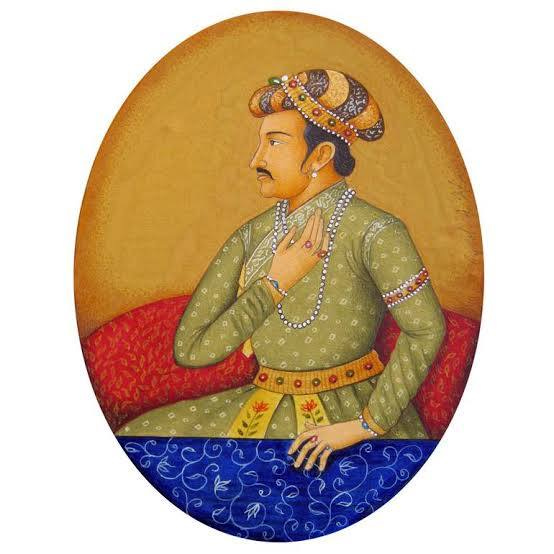
At a similar time, the Mughal Indian Emperor conducted a similar experiment, thought this was reported multiple times by contemporaries and historians alike. One of which was Hieronymus Xavier, a Jesuit who made a mission to Akbar in 1598, who reported from a conversation he had with Akbar himself:
‘He told me that nearly 20 years ago he had 30 children shut up before they could speak, and put guards over them so that the nurses might not teach them their language. His object was to see what language they would talk when they grew older. He was resolved to follow the laws and customs of the country whose language was that spoken by the children. But his endeavours were a failure, for none of the children came to speak distinctly. Wherefore at this time he allowed no law but his own.’
Hieronymus Xavier,
This account was supported by Manucci a century later
“However, the twelve years having passed, they produced the twelve children before the king. Interpreters for the various languages were called in to help. Each one put questions to the children, and they answered just nothing at all. On the contrary, they were timid, frightened, and fearful, and such they continued to be for the rest of their lives.’
Both of these accounts further support what we might have expected to happen, the developmental issues incurred from such isolation and silence would have had severe effects on the children’s psyche.
Returning to modernity
Despite the experiment being forbidden, there are instances of children being reared without exposure to language2. The most famous and recent of which being “Genie”.
Genie was a victim of severe abuse and child neglect and was imprisoned and bound in a locked room from 20 months until she was 13. Due to this severe social isolation, upon being rescued, she had not acquired any language.
This lead to nearly a decade of scientific study and endeavours attempting to teach Genie to speak and understand a language, and despite much improvement, she was never fully able to acquire a full first language.
Horrifically, the cruelty of one poor girls father unknowingly and inadvertently carried out and proved the experiment that was seen as too unethical to ever properly conduct.
Until next time,


This article would not have been written or possible without the brilliant article “Royal Investigations of the Origins of Language” by Robin N. Campbell & Robert Grieve
Campbell, R.N. and Grieve, R. (1982). Royal investigations of the origin of language. Historiographia Linguistica, 9(1-2), pp.43–74. doi:https://doi.org/10.1075/hl.9.1-2.04cam.
One of these, Robert of Avignon is depicted in Roger Shattuck’s book
A fascinating read Alex!
Great article! This shows how the veritable desire and sheer hubris of man to be legitimised as the superior being know no bounds.